Short answer
Good cable management hides fixed cables, keeps frequently used cables reachable and leaves enough slack for maintenance.
Buying criteria
Fixed versus frequently moved cables
Power strip location
Service loops for moving devices
Reusable ties instead of permanent fixes
Ventilation around adapters
Access for cleaning and swaps
Tidy is not the same as usable
A cable setup can look clean in a photo and still be difficult to live with. If every cable is hidden behind the desk, plugging in a camera, tablet or travel laptop becomes a small chore. Good cable management separates fixed routes from flexible access.
Fixed cables include monitor power, dock connections and the lamp. Flexible cables include laptop charging, phone charging, camera accessories and anything you unplug weekly. Treat them differently.
Start with power, not clips
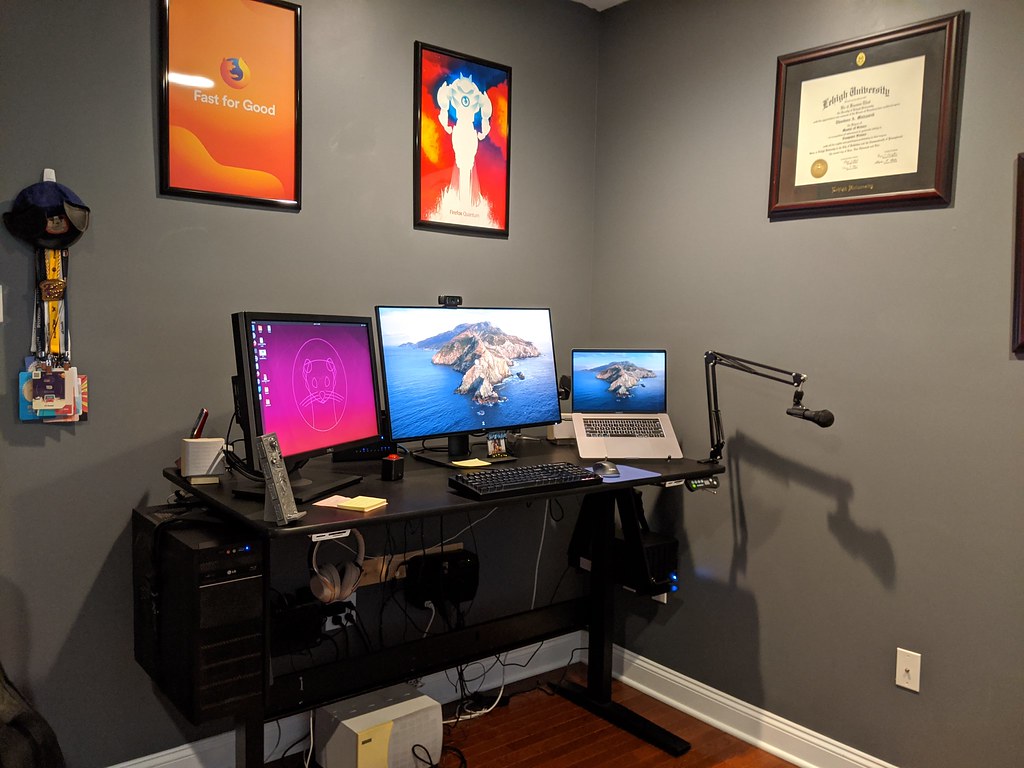
Most messy desks begin with a power problem. Before buying clips, decide where the power strip should sit. It should be off the floor if possible, easy to reach and far enough from feet and chair wheels. The switch should not require crawling under the desk.
Once power has a home, route the monitor and dock cables toward it. Use clips after the route is known, not before.

Leave service loops
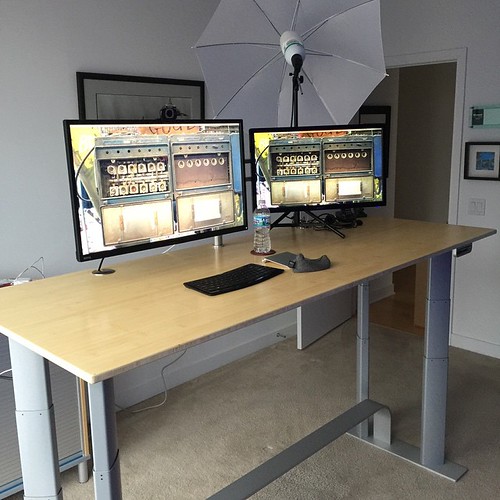
A service loop is a small amount of slack that lets a device move without pulling the cable tight. It helps with monitor arms, sit-stand desks and laptops that move in and out. Without slack, tidy cables can strain ports.
The loop should be controlled, not hanging everywhere. Reusable ties or soft wraps are better than permanent zip ties for cables you may change.
Choose trays and sleeves by access
Cable trays are useful when they are easy to open and deep enough for the power strip. Sleeves are better for a small group of cables that travel together. Adhesive channels look clean but can be frustrating when the setup changes.
If you rent or use a finished wood desk, check whether adhesive products can leave marks. Clamp-on or screw-in options may be better only when the desk can handle them.
Keep heat and cleaning in mind
Adapters and power bricks need air. Do not bury them inside a sealed box just to hide them. Dust also collects around cable trays, so choose a route you can clean without dismantling the whole desk.
The best cable setup is the one you can maintain in five minutes. If it needs a full teardown for every change, it is too complicated.
Deskwise setup notes
Use this guide with real measurements rather than a mental picture of the desk. Measure the surface, the distance to power, the height of the chair when your arms are relaxed, and the space behind the monitor. Those numbers make it easier to reject gear that looks useful but will not fit the room.
Before buying, compare the product against these criteria: Fixed versus frequently moved cables, Power strip location, Service loops for moving devices, Reusable ties instead of permanent fixes. If two options look similar, choose the one with clearer dimensions, simpler returns and fewer assumptions about your room. If a product page hides weight limits, cable lengths or clamp requirements, treat that as a buying risk.
Also check the likely failure points: Tying every cable so tightly that devices cannot move, Mounting the power strip where switches are unreachable, Covering heat-producing adapters. These are not edge cases for remote workers. They are common reasons a desk upgrade becomes another object to manage. A good purchase should make the workday easier to reset, clean and adjust.
Measurement and maintenance notes
Before using this desk setup advice as a shopping list, turn it into a small worksheet. Write down the desk width, desk depth, chair height, distance to the nearest outlet, monitor size, laptop size and the items that must stay on the surface every day. The numbers do not need to be perfect, but they should be real. A measured note beats a memory of how the room feels.
Use the criteria as a filter, not as decoration: Fixed versus frequently moved cables, Power strip location, Service loops for moving devices, Reusable ties instead of permanent fixes, Ventilation around adapters, Access for cleaning and swaps. If a product page does not answer one of those points, pause before buying. Missing information is itself useful information because it tells you what you may need to confirm with the retailer, manufacturer manual or return policy.
Run a one-week trial when possible. Set up the item, work normally, then write down what became easier and what became more annoying. Good desk gear tends to disappear into the routine. Bad desk gear creates a new ritual: moving it aside, charging it constantly, cleaning around it, tightening it, or explaining why it still does not feel right.
Watch for these failure patterns: Tying every cable so tightly that devices cannot move; Mounting the power strip where switches are unreachable; Covering heat-producing adapters; Using adhesive clips on dusty or weak surfaces; Forgetting travel chargers and temporary devices. They show up because home offices are mixed-use rooms. A desk may be a work surface during the day, a study spot at night and a storage surface on weekends. Gear that only works in a staged photo can fail when the room returns to normal life.
If you share the workspace with a partner, child, roommate or occasional guest, favor reversible setup choices. Adjustable heights, movable lights, reusable cable ties and products with clear return terms reduce the cost of being wrong. Permanent adhesive routes, oversized furniture and single-purpose accessories should earn their place before they become part of the room.
Mistakes to avoid
- Tying every cable so tightly that devices cannot move
- Mounting the power strip where switches are unreachable
- Covering heat-producing adapters
- Using adhesive clips on dusty or weak surfaces
- Forgetting travel chargers and temporary devices
FAQ
Are cable boxes safe?
They can be safe when used with ventilation and sensible power loading. Do not trap heat-producing adapters in a sealed box.
Should I use zip ties?
Use reusable ties for most desk cables. Permanent zip ties are best for cables that truly never move.
Where should the power strip go?
Place it where it is off the floor, reachable and protected from chair movement. Under-desk trays often work well.
How do I manage a laptop cable?
Keep it reachable and give it a simple dock point. Do not tie it into a fixed route if you move the laptop often.